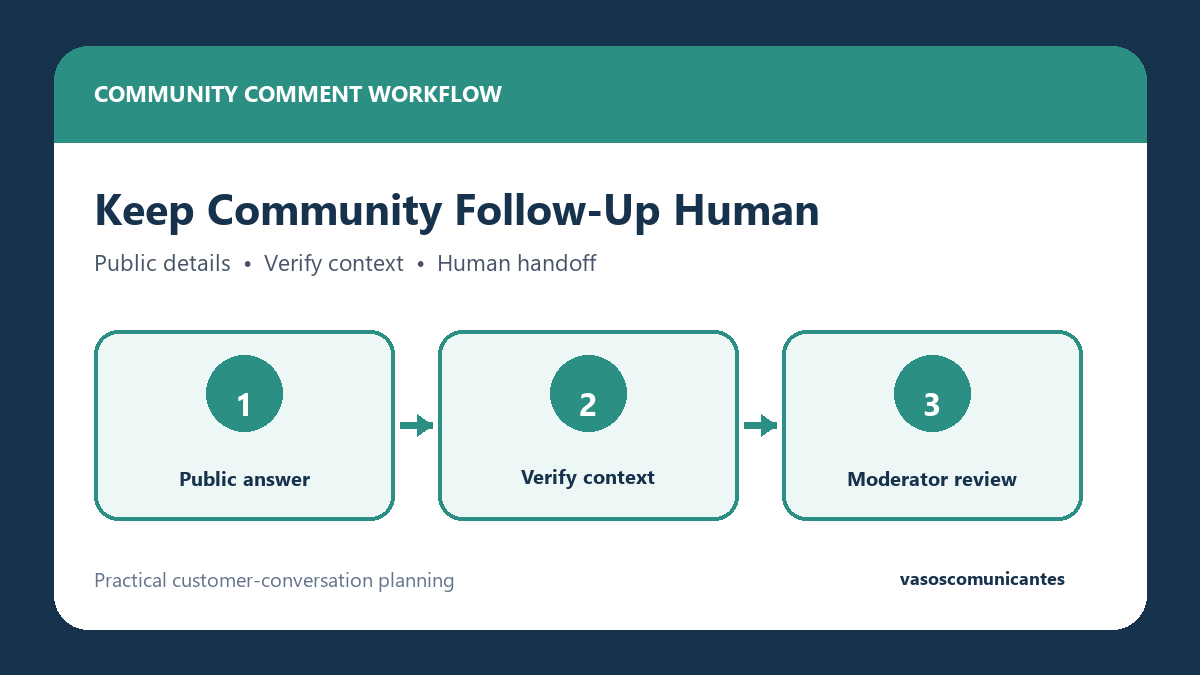
Managing public Facebook comments is a regular task for community groups, volunteer organizers, and advocacy projects. Balancing helpful responses with limited staff capacity and responsible data handling calls for a clear process. A structured approach helps teams route inquiries consistently and avoid collecting sensitive details in routine chat.
A human-reviewed workflow bridges the functional gap between open public engagement and organized, deliberate data handling. By thoughtfully categorizing interactions based on their specific content and context, volunteer organizers can attempt to quickly answer stable public details, thoughtfully route event questions to the right team members, and properly identify matters requiring specialized staff attention. This approach helps support community engagement while actively working to keep private case, identity, health, immigration, legal, safeguarding, and financial information out of routine chat platforms. Ultimately, a documented protocol gives your staff and volunteer moderators a respectful framework to engage with the public carefully, setting realistic expectations for communication and support.
Establishing a Triage System for Public Comments
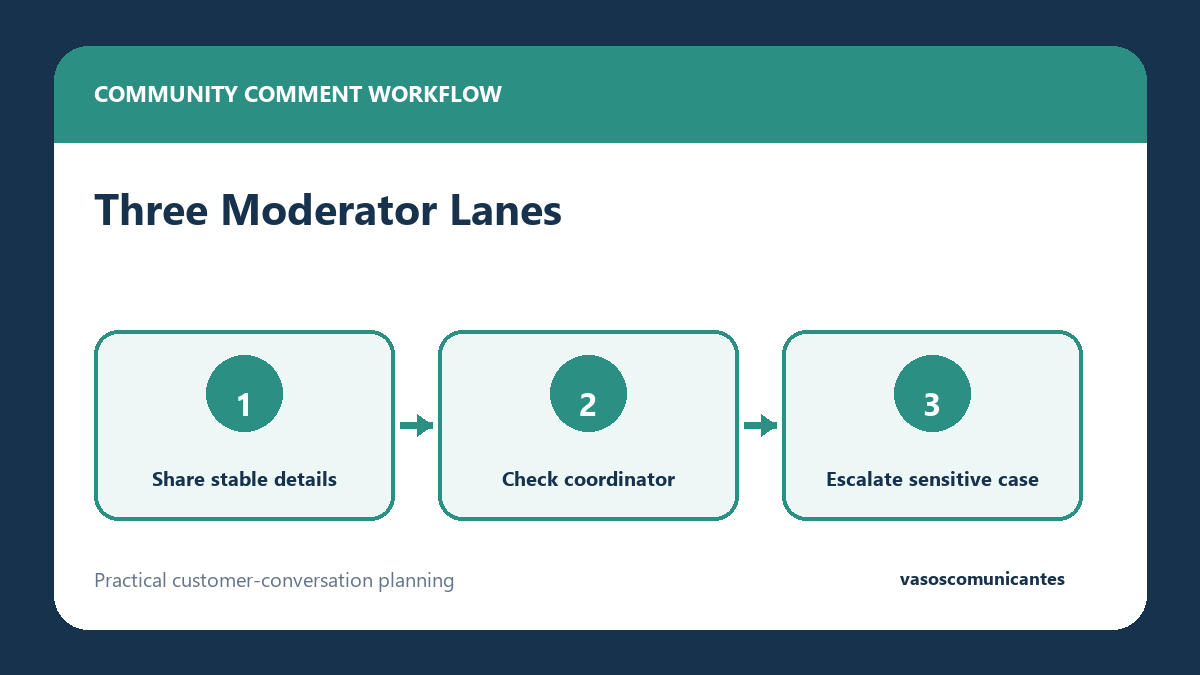
Before your team begins responding to community members, it helps to establish a structured triage system that outlines how different types of incoming comments might be handled. Categorizing inquiries into distinct processing lanes gives moderators a clear framework for making immediate decisions on the platform. This system aims to prevent standard logistical questions from bottlenecking in the queue, and it provides deliberate steps for handling sensitive constituent disclosures according to your organization’s specific policies.
| Public-Answer Lane | Verify-First Lane | Human-Only Lane |
|---|---|---|
| Criteria: General inquiries relying entirely on stable public details. Examples include operating hours, location addresses, public meeting dates, and links to widely available public resources. | Criteria: Questions that require routing volunteer and event questions to designated coordinators, or inquiries where the moderator must check internal schedules before providing a reliable answer. | Criteria: Comments involving complex constituent needs, heated disputes, or any mention of highly sensitive personal data that requires careful organizational handling. |
| Action: Moderators may thoughtfully reply directly in the Facebook comment thread using approved organizational messaging to provide a quick, accessible answer to the community member. | Action: Moderators acknowledge the comment, verify the necessary details internally, or respectfully instruct the user to email a specific coordinator to continue the logistical conversation. | Action: Moderators initiate the internal escalation protocol, refrain from engaging on the substance of the issue, and follow the group’s documented moderation and incident process. |
The Core Human-Reviewed Facebook Comment Workflow
When a notification alerts your team to a new comment on the page, moderators can follow a standardized sequence of actions. This numbered workflow provides a baseline for operational consistency across different volunteer shifts.
- Initial Assessment: Read the comment thoroughly to determine its intent, general tone, and whether any personal information is visibly present in the text.
- Context Check: Look for signs of a relevant community question versus unrelated links, impersonation, or repeated copy-paste text. Uncertainty belongs in the verify-first lane.
- Direct Resolution: If the comment clearly falls into the public-answer lane, rely on the organization’s existing knowledge base to answer stable public details directly in the public thread.
- Internal Routing: For logistical or specific inquiries, route volunteer and event questions to the appropriate department coordinator rather than guessing the answer or making assumptions.
- Channel Transition: If a conversation requires more detail than a standard answer allows, invite the user to transition to a designated email address or phone line.
- Boundary Enforcement: Intervene appropriately to keep private case, identity, health, immigration, legal, safeguarding, and financial information out of routine chat. Follow your organization’s guidelines for redirecting these conversations.
Routing and the Moderator Handoff Checklist
Not every public comment can be resolved by the first person who reads it on the feed. Advocacy projects frequently encounter complex situations that fall outside the typical scope of general community engagement. When a moderator needs to step away from a conversation and escalate safety, legal, safeguarding, privacy, or conflict matters to the organization’s designated person, they should follow a structured, documented protocol.
Use this moderator handoff checklist to support a smooth, respectful transition between team members:
- Review the comment to see if it requires immediate action under the group’s documented moderation and incident process.
- Identify the apparent nature of the escalation based on the user’s stated concerns.
- Locate the correct designated person within the organization’s internal directory for this specific topic.
- Draft an internal note outlining the context of the social media interaction and any previous replies.
- Send the internal note and a link to the designated person via your organization’s internal communication channel.
- Refrain from making absolute claims to the user regarding the outcome; simply note that the inquiry has been forwarded for review.
Understanding Chat Transitions and Automated Greetings
When community members transition from public comments to direct messaging, your organization might utilize basic greetings to set expectations regarding response times and operating hours. Facebook provides specific automated greeting instructions to help page administrators configure initial auto-reply messages. These instructions strictly cover the technical setup of greetings and are not intended as compliance or privacy guidance.
For groups exploring third-party chat integrations to manage inquiry volumes, you might reference a technical setup guide detailing how comment-to-Messenger workflows work. This resource serves strictly as an informational guide to help teams review configuration options, not as an endorsement of any platform. Organizations should never assume that automation provides safety, trust, privacy, inclusion, legal compliance, or participation. Automated tools can route basic queries, but human review is generally required for carefully evaluating complex community needs and enforcing data boundaries.
Integrating Comments with Wider Community Efforts
Public comments are often just one part of a broader dialogue between your organization and the local community. Social media interactions usually feed into a larger, ongoing engagement strategy. For a broader look at structuring these complex engagements, reviewing our guide on running community consultations that work might provide your team with additional context for strategic planning.
Practical Measurement Guidance for Consultation Teams
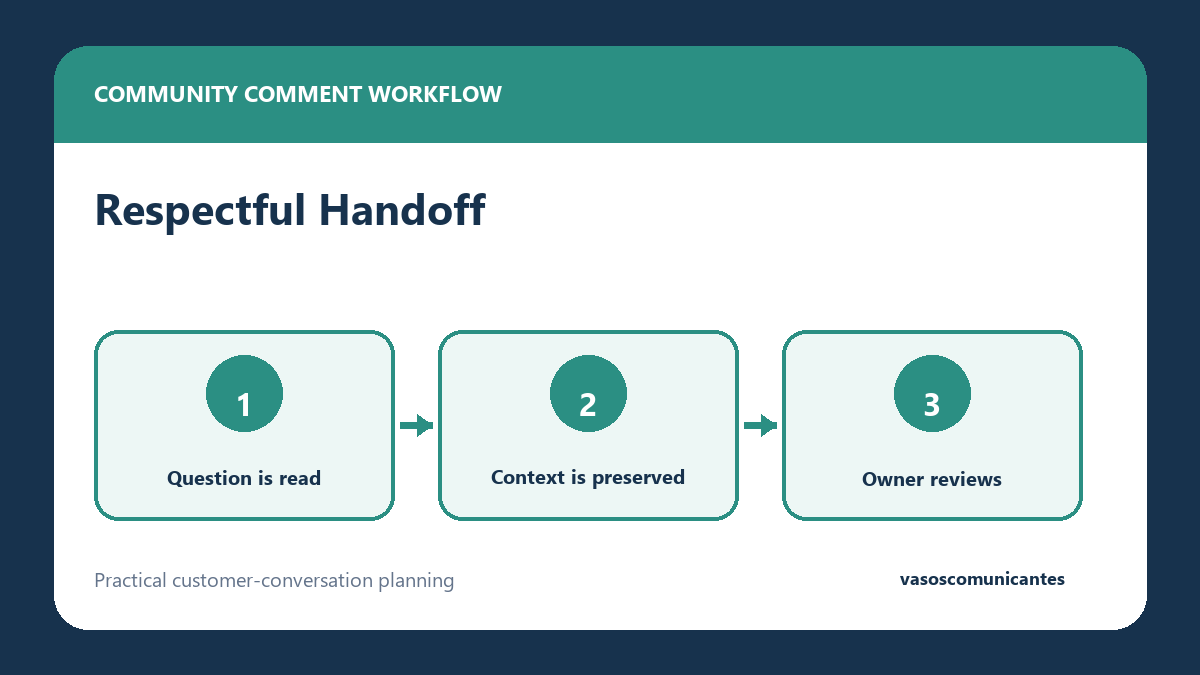
To review whether your workflow fits your team’s current capacity, it helps to implement practical measurement guidance. Tracking specific administrative metrics allows volunteer organizers to evaluate staffing needs and refine training materials over time. Consider tracking these areas:
- Time-to-Triage: Review the average time it takes for a new comment to be categorized into one of the designated processing lanes.
- Routing Accuracy: Track the proportion of volunteer and event questions that are routed to the correct coordinator on the first attempt without needing reassignment.
- Escalation Volume: Monitor the frequency of comments requiring escalation to the designated person, which might signal a need for new public resources.
- Policy Application: Record instances where moderators successfully applied the group’s documented moderation and incident process to redirect sensitive information to designated channels.
Frequently Asked Questions
How do we distinguish genuine participation from spam or impersonation?
Moderators look for specific context clues. Genuine participants often reference hyper-local details or ask relevant questions about recent community posts. Spam or impersonation accounts might post generic links, use aggressive language unrelated to the topic, or mimic leaders. When in doubt, utilize the verify-first lane to assess the interaction carefully.
Why shouldn’t we resolve complex constituent cases via Facebook comments or direct messages?
Routine social chat is not the group’s case-management process. Direct sensitive cases to the organization’s designated intake or support channel and follow its documented policy.
What should we do if a community member posts sensitive health or legal information in a comment?
If sensitive information is posted, follow the group’s documented moderation and incident process immediately. Do not attempt to process private case, identity, health, immigration, legal, safeguarding, or financial information in the comment section. Escalate the matter to your organization’s designated person for review and appropriate follow-up.
How do we handle recurring debates or heated conflicts in the comment section?
If a debate devolves into harassment or severe conflict, moderators should avoid engaging directly in the substance of the argument. Instead, utilize the human-only lane, apply the group’s documented moderation and incident process to manage the thread, and escalate conflict matters to leadership for careful review.
Final Seven-Point Checklist for Community Moderators
To support a consistent workflow, moderators might review this final seven-point checklist before engaging with public comments:
- 1. Review comments carefully to distinguish genuine participation from spam or impersonation attempts.
- 2. Answer stable public details directly in the comment thread when appropriate to assist general audiences.
- 3. Route volunteer and event questions to the appropriate departmental coordinators for accurate answers.
- 4. Refrain from attempting to solve complex constituent cases in public view or standard direct messages.
- 5. Take proactive steps to keep private case, identity, health, immigration, legal, safeguarding, and financial information out of routine chat.
- 6. Follow the group’s documented moderation and incident process when encountering sensitive personal data or conflict.
- 7. Escalate safety, legal, safeguarding, privacy, or conflict matters to the organization’s designated person using standard internal handoff procedures.

0 Comments